
 2024
2024Prime Minister's Award, Korea Invention Patent Exhibition
Awarded for multi-microphone speech processing technology related to mpBeamforming.

About mpWAV
mpWAV is an AI voice interface technology company that helps products listen to, understand, and respond to users in real environments where ambient noise and device echo exist.
We develop the full voice stack — single- and multi-microphone enhancement, wake-word detection, sound source localization, multi-party voice processing, speaker diarization, on-device speech recognition, and a conversational language model.
Beyond algorithms, we provide what real implementation requires: microphone arrays, multi-channel audio I/O, DSP·FPGA·AP porting, and product integration.
Who We Are
mpWAV is an AI voice technology company that improves speech recognition and voice interface performance in real-world noise.
We connect preprocessing that refines the audio arriving at the microphone with wake-word, localization, and speaker analysis, on-device speech recognition, and conversational AI — and implement it all in the customer's software and hardware environment.
We don't stop at cleaning the audio — we connect it so the product understands the user and responds.
Company at a Glance
Founded
2020
mpWAV was founded to solve the speech recognition problems that occur in real product environments.
Business
AI voice interface SW·HW
We develop voice enhancement, voice interaction analysis, speech recognition, conversational AI, and multi-channel hardware.
Technology portfolio
10 voice technology families
mpAEC · mpBeamforming · mpAB · mpNC · mpSeparation · mpDiarization · mpLocalization · mpWWD · mpASR · mpLLM
Product implementation
Software + HW + Embedded
From software validation to microphone arrays, DSP·FPGA·AP porting, and SoC expansion.
Key applications
Robots · Kiosks · Vehicles · Smart Devices · Meetings · Industrial Acoustics
We compose the required technology stack per product and site.
Team
11 people
Specialists in speech signal processing, AI, software, embedded systems, and hardware. (Per official company material, June 2026)
CEO
Hyung-Min Park
Leads mpWAV with research and technology commercialization experience in speech, language, and signal processing.
The Problem We Solve
Speech recognition models are advancing fast, but a real product's microphone never receives only the user's voice.
Conversation, music, road noise, motor noise, the product's own speaker echo, and overlapping speech all arrive together.
Some products cannot fit multiple microphones — and after recognition, the product still needs the user's position, the speaker's identity, intent, and dialogue context.
mpWAV technically connects the entire flow from input audio to the product's final action.
The user's voice can be buried under conversation and household or machine noise.
Prompts and responses played by the product loop back into the microphone.
Earbuds and small devices often cannot fit a multi-microphone array.
Robots and vehicles must know when — and from which direction — the user spoke.
Meetings and voice chat require separating overlapping voices and speakers.
Kiosks and robots must connect recognized sentences to product functions and actions.
Voice interface performance is decided not by the ASR model alone, but by input, analysis, recognition, dialogue, and product integration together.
AI Voice Technology Stack
Improving voice input
Reduces ambient noise from a single microphone.
Reduces acoustic echo from the product's speaker.
Reduces ambient noise and strengthens the target voice with multiple mics.
Integrates mpAEC and mpBeamforming to handle echo and noise together.
Speech separation and speaker diarization
Separates multi-party or overlapping voice input by speaker.
Separates who spoke when in multi-party audio.
Wake-word detection, recognition, and dialogue understanding
Detects the wake word and activates the voice interface.
On-device end-to-end speech recognition converting voice into text or product commands.
Analyzes intent and context of recognized sentences, connecting them to product functions and dialogue flow.
Estimates the speaker's direction or sound source position.
Implementation foundation
Why mpWAV
If noise reduction damages the user's voice along with the noise, recognition performance can drop.
mpWAV designs its technology to reduce ambient noise while minimizing target-voice distortion and recognition loss.
We optimize from the actual input signals rather than fixed microphone position data, reducing the repeated tuning burden when microphone configurations change.
Products with an array use mpBeamforming and mpAB; small products that cannot add microphones use mpNC.
Beyond preprocessing, we connect wake word, localization, speakers, ASR, and LLM as one voice interface architecture.
You don't have to replace your recognition engine — mpWAV preprocessing applies in front of it.
Beyond algorithms we cover microphone arrays, audio I/O, and FPGA·DSP·AP porting.
| Product development challenge | mpWAV approach |
|---|---|
| Voice damaged during noise removal | Preserve target voice, consider ASR results |
| Re-tuning when microphones change | Auto-optimization from input signals |
| Single-microphone product constraints | mpNC single-mic coverage |
| Preprocessing only | Wake·location·speaker·ASR·LLM connected |
| Full ASR replacement burden | Applies in front of existing ASR |
| SW and HW developed separately | Arrays and porting integrated |
From Research to Product
mpWAV's technology is grounded in long-term research in speech and audio signal processing and speech recognition.
Technology validated in papers and patents expands into software, AI models, FPGA·DSP implementations, microphone array modules, and industrial PoCs.
Speech/audio signal processing and noise-robust speech recognition.
Core algorithms and implementation technology protected as domestic and international IP.
Implemented as voice enhancement, interaction, recognition, and conversational AI.
Transferred to real products via FPGA·DSP·AP and microphone arrays.
Validated with real product data and usage environments.
Expanded as software, modules, licenses, and semiconductor IP.
Research → Patent → Algorithm → Embedded System → Product
Applications
Wake-word detection, user direction estimation, motor/fan noise and robot speaker echo processing, connected to commands and dialogue.
Captures far-field voice in store noise, recognizes menus and options, and connects to conversational ordering.
Handles wake word, seat/speech direction, driving noise, and car audio echo.
Single-microphone enhancement and on-device commands for products that cannot add microphones.
Processes multi-party or overlapping voices and structures per-speaker utterances and meeting content.
Analyzes normal and abnormal acoustic patterns of motors and equipment amid complex production noise.
Applies voice enhancement to everyday conversation and public hearing welfare through ClearSense Audio.
Implementation Experience
Validated speech recognition preprocessing for home robots, showroom robots, and care robots.
Deployed an ASR preprocessing module on kiosks with a microphone array and multi-channel audio I/O.
Tested the voice interface in a moving vehicle, with road noise and cabin speaker echo arriving together.
Validated detecting abnormal motor sounds amid complex production noise without a separate test chamber.
Ran a 100-participant field trial of ClearSense Audio at the Nonhyeon and Bangbae senior welfare centers, scoring 5.8 out of 7 for satisfaction.
Engineering Capabilities
Integrates mpWAV technology into existing systems or in front of ASR.
Fits mpWWD, mpASR, and mpLLM to the target product and domain.
Designs multi-channel microphones, speaker output, and AEC reference structures.
Optimizes for real-time execution on the product's compute platform.
Designs collaboration structures around per-product data and requirements.
Expands into dedicated structures for volume production and miniaturization.
Research-Driven Team
mpWAV is a specialist team connecting speech and language research, AI models, software, embedded systems, and hardware development.
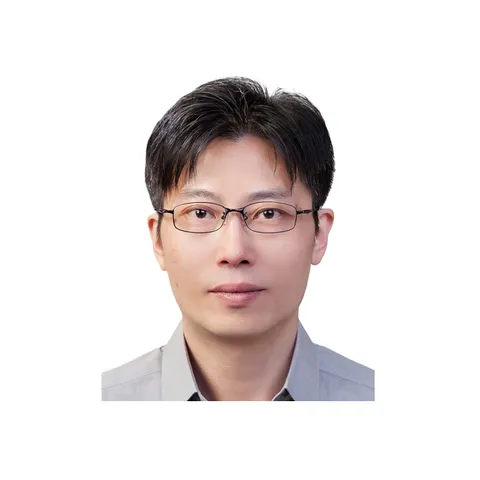
CEO Hyung-Min Park earned his B.S., M.S., and Ph.D. in Electrical Engineering at KAIST, with research and teaching experience at Carnegie Mellon University's Language Technologies Institute and Sogang University.
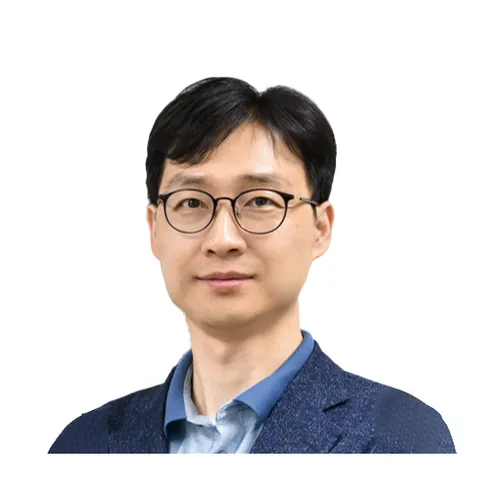
Hyung-Min Park
CEO
Ph.D., KAIST · Professor, Electronic Engineering & AI, Sogang University
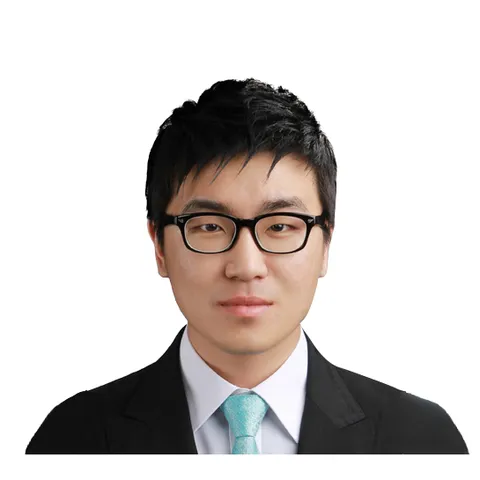
Byung Joon Cho
CTO
Ph.D., Sogang University
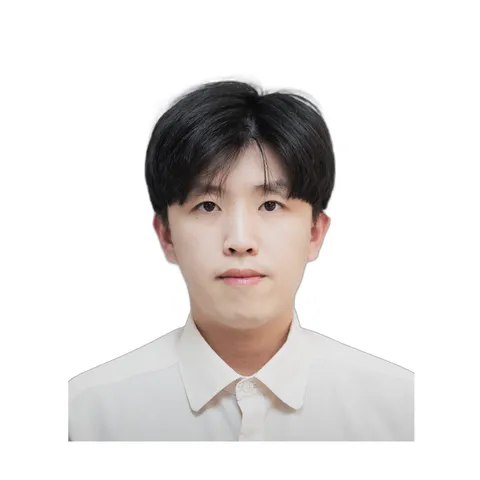
Ui-hyeop Shin
CAIO
Ph.D., Sogang University
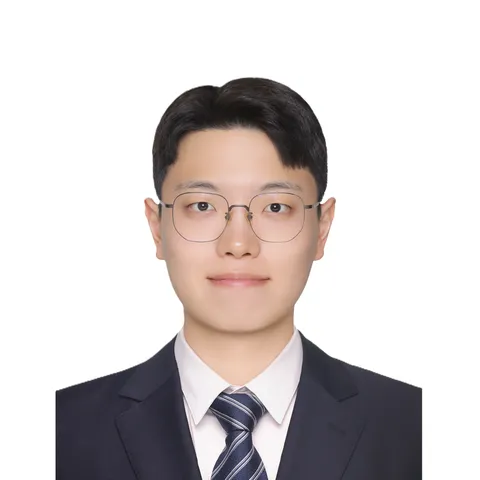
Jun Hyung Kim
COO
Ph.D., Sogang University
Heeman Kim
CSO
M.S., KAIST
Our work on speech separation and speech restoration appears at the top machine-learning venues. Ui-hyeop Shin, our CAIO, is first author on both.
Intellectual Property
mpWAV's corporate intellectual property holdings:
Korean patents
7 registered · 3 pending
International patents
7 registered · 10 pending
Trademarks
2 Korean · 2 international
Design rights
4
Awards and Certifications
2024Awarded for multi-microphone speech processing technology related to mpBeamforming.
 2025
2025Certified by the Ministry of Trade, Industry and Energy for real-environment voice interface preprocessing.
ClearSense Audio was designated an innovative procurement product, establishing a base for public sector deployment.
 2024
2024Recognition for ClearSense Audio, which applies mpWAV voice enhancement to everyday listening.
Milestones
2020.11
2020.12
The foundational algorithm patents moved from Sogang University to the company.
2021.12
2022.12
2023.05
2023.11
Honored in both Mobile Devices, Accessories & Apps and Digital Health.
2023.12
2024.07
2024.12
Awarded for the mpBeamforming patent — microphone-array noise removal.
2024.12
2025.04
For an all-in-one on-device stack spanning preprocessing, recognition, dialogue, and synthesis.
2025.05
Certified as preprocessing technology for speech recognition and enhancement in conversational interfaces.
2025.09
2025.11
2026.03
ClearSense Audio received the designation from Korea's Public Procurement Service.
Business Model
Individual technologies or the full voice interface stack applied to your product.
mpWWD, mpASR, and mpLLM fitted to your product and domain.
Multi-channel voice input hardware designed for robots and kiosks.
Implemented to run on your product's compute platform.
Voice enhancement, interaction, recognition, and industrial acoustic analysis.
Microphones, preprocessing, ASR, LLM, and product APIs connected in one project.
Dedicated voice interface structures for volume production and miniaturization.
Global and Technology Roadmap
Building on voice interfaces for robots, kiosks, and mobility, mpWAV is expanding into smart devices, meetings and voice chat, and hearing assistance.
The following is a roadmap the company is pursuing — not completed results.
Core Applications
Strengthening preprocessing and product integration for real noise environments.
Expanded Applications
Applying single-mic technology, speaker analysis, recognition, and conversational AI to new product lines.
Global Products
Scaling language-independent preprocessing and on-device models into global products.
Semiconductor Platform
Pursuing semiconductor collaboration for volume production and miniaturization, built on FPGA·DSP implementations.
Our Vision
The voice interface mpWAV pursues is not technology that only works in a quiet lab.
Amid conversation, music, vehicles, and machine noise, products must hear the user's call, know their position and identity, and understand intent and dialogue context.
mpWAV connects input enhancement, interaction analysis, on-device recognition, and conversational AI to deliver voice experiences you can trust in real environments.
Company Information
| Company | mpWAV Inc. |
|---|---|
| Korean name | (주)엠피웨이브 |
| CEO | Hyung-Min Park |
| Founded | 2020 |
| Business | AI voice interface software & hardware |
| Technology | Voice enhancement · Interaction · ASR · LLM · Multi-channel HW |
| contact@mpwav.com | |
| Phone | +82-2-705-8916 |
| Headquarters | Teilhard Hall 405, 35 Baekbeom-ro, Mapo-gu, Seoul, Korea |
FAQ
mpWAV is an AI voice technology company that improves product voice interfaces in real-world noise.
We develop voice enhancement, wake-word detection, localization and speaker analysis, on-device speech recognition, a conversational LLM, and multi-channel hardware.
Noise and echo reduction are part of our core technology.
The full portfolio spans mpNC, mpAEC, mpBeamforming, mpAB, mpSeparation, mpDiarization, mpLocalization, mpWWD, mpASR, and mpLLM.
Yes. mpNC is built for those products.
It handles single-microphone noise control for earbuds and small smart devices that cannot fit an array.
Quantitative performance and supported platforms should be validated under real product conditions.
Yes — we build both ourselves.
mpASR, an on-device end-to-end speech recognition technology, and the conversational mpLLM.
Actual runtime performance depends on model version and target platform.
Yes.
mpAEC is published in IEEE Transactions on Signal Processing and mpBeamforming in IEEE/ACM Transactions on Audio, Speech and Language Processing. Our speech separation work appeared at NeurIPS 2024.
The company holds 7 registered and 3 pending patents in Korea, and 7 registered and 10 pending abroad.
Both.
mpWAV connects voice algorithms and AI models with microphone arrays, multi-channel audio I/O, and FPGA·DSP·AP porting.
Per official company material (June 2026): 7 Korean patents registered and 3 pending, 7 international patents registered and 10 pending.
No.
The 50 patents are the cumulative record of the core researchers, listed separately from mpWAV's corporate patents.
We have deployment or validation experience in robots, kiosks, mobility, factory acoustic inspection, and hearing assistance.
Smart devices, meetings and voice chat, and defense are expansion areas built on our existing technology.
Yes — both are available.
Depending on the product and project: software, AI models, microphone arrays, porting, technology licensing, joint development, and semiconductor IP collaboration.
Work with mpWAV
Tell us your product type, microphone and speaker structure, dominant noise, required voice features, and target platform — we will review the right mpWAV technology and collaboration model.
From single-mic noise control to multi-channel echo and noise processing, wake·location·speaker analysis, on-device ASR and conversational LLM, microphone arrays and DSP·FPGA·AP porting — start at whatever stage your product is in.